



Welcome to the Second Faculty of Medicine! This guide will help you find the most important information for your first days and weeks at the faculty.
Study Department
The Study Department has administrative responsibility for your studies and is the best way for you to communicate with the faculty.
Student Counselor
Year 1–2
Cares about the smooth progress of your first steps at the faculty in the first two years.
Kateřina Flodinová
Guidance Counselor
Year 1–6
Helps you answer questions, listens to your needs, and assists with everyday student life problems.
Anna Pecharová
→ Getting Started
Medical Check-up
Haven't had your medical check-up yet? You can complete it after arrival with the faculty's student GP.
Mandatory Medical Check-up – what's required →
Faculty GPs →
Important Dates and Events
Before the academic year starts
- Enrolment – according to the Academic Calendar →
Late September / Early October
- Freshers' Week (incl. White Coat Ceremony) – details in Student Events →
October
- Welcome Day (organised by the Motolák Student Association) – details on Motolák’s Facebook →
- Welcome Party – details on Motolák’s Facebook →
- Matriculation Ceremony – Academic Calendar →
Great Hall / Velká aula, Karolinum, Ovocný trh 3, Prague 1; Google maps →
Timetables and the Student Information System
 Use SIS to view timetables, course information and your study records. Teaching schedules are published in SIS as they become available.
Student Information System (SIS)→
Credit System
The ECTS credit system measures your study progress by assigning credits to successfully completed courses. To continue to the next year of study, you must earn the required minimum number of credits and complete all mandatory academic requirements.
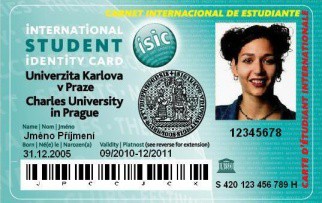
Charles University Student Identity Card
-
With a Charles University card, you are entitled to a number of benefits and discounts, including, for example, travel or travel health insurance.
-
You can get it at the point of sale – UK Point in Celetná Street 13 →
How the Faculty and University Work
- As a new student, you will mainly interact with the Study Department, your teachers and student organisations. The faculty is led by the Dean and the Dean's Advisory Board. Members of the Board can be contacted by e-mail or through the relevant division of the Dean’s Office. if you wish to arrange a meeting. The Academic Senate, which includes student representatives, participates in the governance of the faculty. The Scientific Advisory Board is another of the governing bodies.
- Charles University has 17 faculties and more than 42,000 students. It is led by the Rector, currently Prof. Milena Králíčková. Students are represented at university level through the Charles University Academic Senate.
Essential Online Services
IT Services
- Office 365
How to Get Office 365 → - Cesnet: Internet connection, transmission, processing, storage and data security, services for collaboration between users and teams (ownCloud – secure storage and sharing of up to 100 GB of data; FileSender – sharing and storing large files; Web conferencing – online meetings and seminars in web browser environment; eduroam – WiFi connection free of charge at school; metacentre – computational calculations).
Links to services → - Student email
Manual (Charles University website) →
Faculty Website and Social Media
Faculty
- Study information: Study section →
- Instagram (English) →
- Podcast PeliCast (English) →
- Facebook (Czech) →
- Instagram (Czech) →
Student organisations
Campus Locations
Dean's Office (FN Motol)
- Metro A: Nemocnice Motol
- Bus: 167, 168, 174, 180, 184
- Also bus stops Šafránecká (nos. 174, 180, 184) and Na Šafránce (nos. 167, 168)
- Google Maps →
Plzeňská Campus
(Departments of Anatomy, Languages and other theoretical departments)
- Tram: 9, 10, 16 (Motol stop)
- Bus: 168, 174, 180, 184 (Motol stop)
- Google Maps →
Sports Centre
(Department of Physical Education)
- Bus stop: Gercenova or Řepčická
- Google Maps →
Everyday Student Life
Libraries
- Department for Scientific Information – the faculty library
- Charles University library network
- The National Library of the Czech Republic (or Klementinum, according to its location) offers especially scientific literature, you can read either in the General Reading Room, or or borrow/return books from and to the library.
- The Municipal Library of Prague and its branches offer chiefly fiction (in Czech and other languages), which you can borrow home.
Dining and Cafeterias
Charles University Refectory Network
- Dormitories and Refectories of Charles University – an overview
Motol University Hospital Canteen (jídelna FN Motol)
- You can pick up your FN Motol meal card against a refundable deposit of CZK 150. Place of issue: Second floor of the headquarters building – the main central corridor to the cinema, here on the left and at the end of the corridor there is the Supplier and Customer Records Department Office.
Opening hours: Daily 8.00–10.00 and 13.00–14.00.
For capacity reasons, please use the Motol canteen after 1 p.m. (at that time, you take advantage of a higher student discount).
Necessary documents: Student ID card of the Second Faculty of Medicine, Charles University. - Before you start paying with your card, deposit cash into your account at the FN Motol canteen cash desks, preferably at cash desk number 3. Tell the cashier in advance before you put the card on the reader. Each time you place the card, the display will show your account balance. The recommended minimum deposit is CZK 200.
- You can use the card to buy any products in the FN Motol canteen and cafeteria. Price list: The Catering software will provide you with one subsidy from the Ministry of Education, Youth and Sports for the main meal on weekdays in the amount of CZK 17.95. The price of the meal includes tea. Other additional assortment will be charged at the regular price without subsidy.
- The FN Motol canteen, including the cafeteria, is open Monday–Friday 11.00–15.00 and 17.00–18.30.
- If you lose your card, you can block it either in person at the Card Centre of FNMH, or by calling extension 1895 or +420 224 431 895.
- You can return the card at the Card Centre. Provided the card is not damaged, we will refund your deposit of 150 Kč. Please ensure that you have collected your deposit in cash from the cash desk in the canteen before returning the card.
Pelikantýna – Bistro on the Plzeňská Campus
- It is located on the ground floor of block A of the building of theoretical and preclinical departments.
- The student subsidy covers one main meal per day.
- At the checkout, attach your CU student card to the reader, the subsidy will be deducted when paying.
- In case of problems, contact Mr Daniel Spálenka.
Your First-Year Subjects
Anatomy, Histology and Embryology
- Departments:
Department of Anatomy
Department of Histology and Embryology
Plzeňská Campus | map
Due to the load of study, this is the most difficult subject in the first year, in which a thorough continuous preparation from the first day of study really pays off, as it will significantly increase the anticipated chances of success in the final exam. In addition to the considerable amount of morphological knowledge, it is necessary to master the applied Latin nomenclature of individual structures of the human body. Emphasis is placed on systemic, topographical, imaging and clinical anatomy, structure and function of human body tissues, development of the human individual before birth and basic developmental defects. It is essential to understand and be able to clarify what a given structure looks like, how it develops, how it can be visualized, what is its function and clinical significance.
Teaching takes place in the winter and summer semesters (3 lectures and 2 practicals per week) and ends with an exam. The histology and embryology lectures and anatomy lectures take place at Plzeňská Campus (Building A, A303 lecture Hall) as well as practical trainings (Building C, Department of Anatomy, in the designated classrooms, the dissection hall and the histology slide room). During the winter and summer semesters, a one week dissection course closed with a practical exam is included in the syllabus. During the semester, students are continuously and repeatedly tested in a written or oral form. Senior students take part in the teaching process to a large extent. The websites of the departments contain the syllabus of lectures and practicals, credit and exam conditions, including exam questions, study materials, a list of recommended literature, links to study resources and current information of education and life of the departments. For the practical training, it is necessary to carry the name badge with you (will be provided at the first practical session), a white lab coat and slippers. Additional equipment for the anatomy practical training are forceps and gloves, and a special set of instruments for the dissection course. If problems arise at the beginning or during the semester, it is necessary to immediately consult with the lecturers or teachers or directly with the head of the department. We operate based on the belief that at a university, communication should flow not only from teachers to students, but also in the opposite direction. Further details are found on the websites of the departments and will be presented at the beginning of the course.
Biophysics
- Department of Biophysics
Plzeňská Campus (Plzeňská 311, Praha 5) | map
Biophysics lessons only take place in the winter semester. They consist of a lecture and practical exercises every week, and there is a final exam. The syllabus is available on the departmental web pages. Lectures take place in the main faculty lecture room; seminars and practical exercises mostly take place in the department (C4).
Bioethics and Psychology
- Year 1, winter and summer semester: Bioethics and Psychology I. | SIS →
- Year 2, summer semester: Bioethics and Psychology II. | SIS →
- Year 3, summer semester: Bioethics and Psychology III. | SIS →
- Department of Medical Ethics and Humanities
Plzeňská Campus | map
Teaching consists of lecturers on various bioethical and psychological topics and takes place in the Pelouch lecture hall (in “Žížala”) in the winter semester. The aim of the course is to get students acquainted with bioethical and psychological thinking in medicine, especially in medical practice. In the summer semester, education continues as a Bioethics and Psychology II. Students will have presentations on bioethical and psychological topics and their understanding will be verified by an oral exam. Syllabus and more detailed information about the exam is available in the Study Information System (SIS) and Moodle.
Cell
- Departments:
Department of Histology and Embryology
Department of Medical Chemistry and Clinical Biochemistry
Department of Biology and Medical Genetics
Plzeňská Campus | map
Cell is a subject in the winter semester of the first year. Teaching of the subject is jointly provided by the Department of Histology and Embryology, the Department of Medical Chemistry and Clinical Biochemistry, and the Department of Biology and Medical Genetics. The aim of the subject is to present (in one two-hour lecture per week in the Pelouch Hall) the basics of cell and molecular biology, genetics and biochemistry. The course concludes with a credit and an exam. During the first two years of study, Cell is followed by specialised subjects Anatomy, Histology and Embryology (in the winter and summer semesters of the first year), Biology (in the summer semester of the first year and winter semester of the second year) and Biochemistry (in the winter and summer semesters of the second year), which will return to many of the themes at a higher level and from a different perspective.
Informatics and Biostatistics
- Department for Scientific Information
Motol University Hospital (V Úvalu 84, Praha 5, pavilion no. 7) | map
Informatics and Biostatistics course takes place in the winter semester in the form of lectures 1× in 14 days and seminars. Lectures take place in the Great Lecture Hall, seminars in the headquarters of the institute. The course is concluded with a credit.
The main objective of the course is to teach students about various information systems and biostatistics. After completing the course, the student will navigate databases, search efficiently in quality sources, apply the rules of publication ethics, correctly quote and use citation managers, think critically in a wider context when evaluating biomedical information and independently work on their medical portfolio. To know basic concepts from medical statistics and to know specific statistical methods including contexts.
Sylabus and more information about successful completion of this course can be found in the Student Information System (SIS) and Moodle.
- Year 1, winter semester: Latin terminology I. | SIS →
- Year 1, summer semester: Latin terminology II. | SIS →
- Department of Languages
Plzeňská Campus | map
Latin Terminology is a two-semester course in the form of two-hour sessions, with a final exam at the end of the summer semester. Seminars take place at the Department of Languages and in the lecture rooms and halls at Motol University Hospital and Plzeňská Campus. Syllabuses and more detailed information regarding the exam are available on the Study Information System (SIS).
Nursing
- Year 1, winter semester: Nursing I. | SIS →
- Year 1, summer semester: Nursing II. | SIS →
- Year 3, winter semester: Nursing III.
- Department of Nursing
Motol University Hospital (V Úvalu 84, Praha 5, building U) | map
There are three semesters of nursing classes. The first year concludes with a credit, the winter semester of the second year with a credit and an exam. In the winter semester of the 1st year, teaching takes place in the form of lectures. In the summer semester, lectures are complemented with practical classroom exercises, and with clinical practice. The subject is conceived of as being both theoretical and practical in nature. Nursing is defined as a modern scientific discipline with its own philosophy, value system, research topics and methodology. It enables students to understand the main purpose of professional nursing practice, which is safely and satisfactorily meeting the health requirements of patients, their families and the community. From a practical point of view, emphasis is put on the teaching of nursing principles and interventions in laboratory conditions and in clinical practice. Practical exercises enable students to obtain the basic manual skills and confidence for the safe and high quality implementation of nursing procedures and patient interventions. One key requirement for implementing clinical practice in the first year (April–May) is the physical fitness to carry out practical teaching in health care, including up to date vaccinations against infectious diseases (viral hepatitis B) in accordance with current legal guidelines.
The subject syllabus, an overview of the basic study materials and conditions for successfully completing the subject can be found on the departmental web pages.
First Aid
- Department of Anaesthesiology and ICM
Motol University Hospital (V Úvalu 84, Praha 5, Blue building) | map
Teaching takes place in the winter semester in the form of lectures and practical classes, and it concludes with a final exam. Syllabuses and exam questions can be found on the departmental web pages. The basic text for teaching is První pomoc pro posluchače 2. LF [First Aid for Students at the Second Faculty of Medicine], published by Carolinum, 2010.
Czech
- Year 1, winter semester: Czech I. | SIS →
- Year 1, summer semester: Czech II. | SIS →
- Year 2, winter semester: Czech III.
- Year 2, summer semester: Czech IV.
- Year 3, winter semester: Czech V.
- Year 3, summer semester: Czech VI.
- Department of Languages
Plzeňská Campus | map
The aim of the course Czech I is to lay the foundations for everyday communication in the Czech language, to acquaint students with the grammatical system of the language, and to equip them with the essential vocabulary. After the first semester, students continue practising everyday communication in the Czech language, go deeper into the grammatical system of the language and expand their vocabulary. The course is focused on practising everyday communication and prepares students for the study of Czech medical terminology in higher years.
We strongly recommend completing the optional course Freshers‘ Week Czech Language Course, since the syllabus of the course Czech I begins with the 3rd lesson of the Czech Step by Step textbook.
Code of Conduct for Practical Classes and Lectures
- Respect patient privacy and confidentiality.
- Do not photograph or record patients, cadavers, anatomical specimens, or dissection materials.
- Follow all instructions provided by teaching staff and hospital personnel.
- Comply with the University's Code of Ethics and applicable legislation.


